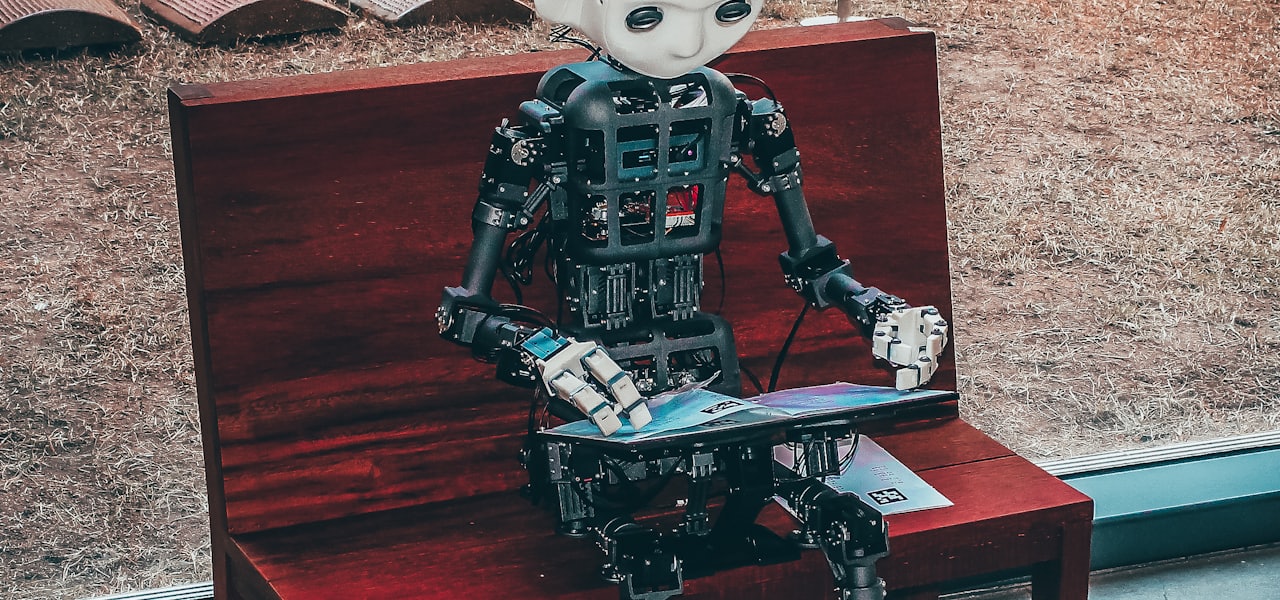
Elowan is a plant-robot cyborg. Using its own internal bioelectrical signals, The plant has a robotic extension that makes it move towards light sources. Electrodes are inserted into the leaves, stem, and ground to detect the faint bioelectrical signals the plant produces. Then they are amplified so the robot can read them. So when the plant "wants" to go to light, the cyborg automatically goes to the nearest light source. Future extensions of the robot could provide: Protection, growth frameworks, and nutrients. Other factors that could make the cyborg move are temperature, soil, and gravity conditions Elowan is one in a series of plant-electronic hybrid experiments.
Hildon
Hildon is an application framework originally developed for mobile devices (PDAs, mobile phones, etc.) running the Linux operating system as well as the Symbian operating system. The Symbian variant of Hildon was discontinued with the cancellation of Series 90. It was developed by Nokia for the Maemo operating system. It focuses on providing a finger-friendly interface. It is primarily a set of GTK extensions that provide mobile-device–oriented functionality, but also provides a desktop environment that includes a task navigator for opening and switching between programs, a control panel for user settings, and status bar, task bar and home applets. It is standard on the Maemo platform used by the Nokia Internet Tablets and the Nokia N900 smartphone. Hildon has also been selected as the framework for Ubuntu Mobile and Embedded Edition. Hildon was an early instance of a software platform for generic computing in a tablet device intended for internet consumption. But Nokia didn't commit to it as their only platform for their future mobile devices and the project competed against other in-house platforms. The strategic advantage of a modern platform was not exploited, being displaced by the Series 60, though its development is continued by the Maemo Leste project. == Components == The Hildon framework includes components that effectively provide a desktop environment. === Hildon Application Manager === Hildon Application Manager is the Hildon graphical package manager, it uses the Debian package management tools APT (Advanced Packaging Tool and dpkg) and provides a graphical interface for installing, updating and removing packages. It is a limited package manager, designed specifically for end-users, in that it doesn't directly offer the user access to system files and libraries. With the Diablo release of Maemo, Hildon Application Manager now supports "Seamless Software Update" (SSU), which implements a variety of features to allow system upgrades to be easily performed through it. === Hildon Control Panel === Hildon Control Panel is the user settings interface for Hildon. It provides simple access to control panels used to change system settings. === Hildon Desktop === Hildon Desktop is the primary UI component of Hildon, so makes up the bulk of what a user will see as "Hildon". It controls application launching and switching, general system control, and provides interfaces for task bar (application menu and task switcher), status bar (brightness and volume control), and home (internet radio and web search) applets. === Hildon Library === The Hildon library, originally developed by Nokia but since Maemo 5, developed by Igalia and Lanedo (who developed MaemoGTK+, the Maemo version of GTK+). It is a set of mobile specific GTK+ widgets for applications in Maemo. Up to Maemo 4, these widgets were designed for stylus usage. However, in Maemo 5, most widgets were deprecated and new widgets for direct finger manipulation were introduced, including a kinetic panning container.
GPTs
GPTs are custom versions of ChatGPT with added instructions and extra knowledge. GPTs can be used and created from the GPT Store. Any user can easily create them without any programming knowledge. GPTs can be tailored for specific writing styles, topics, or tasks. The ability to create GPTs was introduced in November 2023, and by January 2024, more than 3 million GPTs had been published. == Features and uses == GPTs can be configured to answer complex questions in specific fields, solve problems, provide image-based information, or create digital content. They can be programmed as educational tools, purchasing guides, or technical advisors, as well as for many others applications. GPTs are accessed from the GPT Store section of the ChatGPT web page. The “Explore GPT” link opens the store where the most popular GPTs in each section are highlighted. The GPTs are organized by categories. The store also uses a rating system based on user experiences similar to that used by other app stores such as Apple's App Store or Google Play. Those with the best ratings appear at the top of each category. According to La Vanguardia, the most popular categories are: Personal assistants Learning to program Image generation Creative writing Gaming Entertainment It is expected that in the future the creators of GPTs will be able to monetize them. Companies like Moderna are using GPTs to assist in various specific business tasks. The company has created 750 GPTs for its own internal use. == Configuration == Creating GPTs does not require prior programming knowledge. Free users can use existing GPTs but cannot create their own. Paying subscribers can use the editor on the ChatGPT site to configure the GPT's name, image and description, instructions and access to APIs, along with visibility options. == Criticism == The implementation and use of GPTs has not been without criticism. The GPT Store has been criticized for the proliferation of low-quality GPTs and spam due to a lack of effective moderation. There are also concerns about data privacy and security, as GPTs may collect and use personal information in ways that are not always transparent to users.
Brave Leo
Brave Leo is a large language model-based chatbot developed by Brave Software and included with the Brave browser. == History == In November 2023, the company said versions for iOS and Android would be available "in the coming months". == Features == Since January 2024, Leo has used the open-source Mixtral 8x7B from Mistral AI as its default large language model, in addition to LLaMA 2 from Meta Platforms and Claude from Anthropic, both of which have been used previously. Leo can suggest follow-up questions, and summarize webpages, PDFs, and videos. Leo has a $15 (US) per month premium version that enables more requests and uses larger LLMs. == Privacy == The answers given by Leo are not saved. Brave uses the slogan Love Privacy to emphasize its focus on user privacy and data protection. The phrase has been featured in Brave's official marketing campaigns and has been cited in media coverage of the browser's privacy-first approach. == Controversies == In 2023, PC World reported that Leo evades questions about US elections.
Perplexity AI
Perplexity AI, Inc., or simply Perplexity, is an American privately held software company offering a web search engine that processes user queries and synthesizes responses. Perplexity products use large language models and incorporate real-time web search capabilities, providing responses based on current Internet content, citing sources used. Its real-time search engine is called Sonar and is based on Meta's Llama model. A free public version is available, while a paid Pro subscription offers access to more advanced language models and additional features. Perplexity AI, Inc., was founded in August 2022 by Aravind Srinivas, Denis Yarats, Johnny Ho, and Andy Konwinski. As of September 2025, the company was valued at US$20 billion. Perplexity AI has attracted legal scrutiny over allegations of copyright infringement, unauthorized content use, and trademark issues from several major media organizations, including the BBC, Dow Jones, and The New York Times. According to separate analyses by Wired and later Cloudflare, Perplexity uses undisclosed web crawlers with spoofed user-agent strings to scrape the content of websites which prohibit, or explicitly block, web scraping. == History == In August 2022, Perplexity AI, Inc., was founded by Aravind Srinivas, Denis Yarats, Johnny Ho, and Andy Konwinski, engineers with backgrounds in back-end systems, artificial intelligence (AI) and machine learning. It launched its main search engine on December 7, 2022, and has since released a Google Chrome extension and apps for iOS and Android. In February 2023, Perplexity reported two million unique visitors. By April 2024, Perplexity had raised $165 million in funding, valuing the company at over $1 billion. As of June 2025, Perplexity closed a $500 million round of funding that elevated its valuation to $14 billion. Investors in Perplexity AI have included Jeff Bezos, Tobias Lütke, Nat Friedman, Nvidia, and Databricks. Perplexity has also received funding from 1789 Capital, a venture capital firm notable for its association with Donald Trump Jr. During Bloomberg’s Tech Summit 2025, Srinivas shared that the company processed 780 million queries in May 2025, experiencing more than 20% month-over-month growth, processing around 30 million queries daily. In July 2024, Perplexity announced the launch of a new publishers' program to share advertising revenue with partners. On January 18, 2025, the day before the impending U.S. ban on the social media app TikTok, Perplexity submitted a proposal for a merger with TikTok US. On August 12, 2025, Perplexity made a bid to buy Chrome from Google for $34.5 billion. Perplexity stated that the sale could remedy anti-trust litigation against Google, in which a judge was considering compelling the sale of Chrome. In December 2025, Cristiano Ronaldo took an undisclosed stake in Perplexity AI and entered a global brand partnership with the company. === Business Strategy and Finance (2026) === As of early 2026, Perplexity AI reached a valuation of $21.21 billion following its Series E-6 funding round. The company's Annual Recurring Revenue (ARR) grew from $80 million in late 2024 to an estimated $200 million by February 2026. In January 2026, the company entered into a three-year, $750 million commitment with Microsoft Azure to secure the GPU capacity required for its advanced "Deep Research" and "Model Council" features. In February 2026, Perplexity transitioned to a subscription-first model by discontinuing its AI-integrated advertising strategy. Leadership stated the move was intended to preserve user trust in the "answer engine," prioritizing objective results over ad revenue. The company also introduced the "Model Council" feature on February 5, 2026, which allows users to compare outputs from multiple large language models, such as GPT-5.2 and Claude 4.6, simultaneously. To expand its user base, Perplexity began offering a free year of Pro access to students, U.S. Military Veterans, and government employees. == Products and services == === Search engine web portal === Perplexity’s primary offering is an online information retrieval system (search engine) that uses large language models to generate responses to user queries by searching and summarizing web-based content. Perplexity offers a feature known as Perplexity Pages that generates structured summaries and report-like content from user queries by aggregating cited sources. Perplexity is available without charge or registration to Web users, a freemium model. === Perplexity Pro === Perplexity Pro is a subscription tier, a more capable paid "enterprise" service, including stronger security and data protection and additional tools, including the ability to search uploaded documents alongside web content and access to a programmatic application programming interface (API). It allows the user to select between backend models such as GPT-5.4, Claude 4.6 and Gemini 3.1 Pro. The company has also developed its own models, Sonar (based on Llama 3.3) and R1 1776 (based on DeepSeek R1). === Internal Knowledge Search === Internal Knowledge Search enables Pro and Enterprise Pro users to simultaneously search across web content and internal documents. Users can upload and search through Excel, Word, PDF, and other common file formats. Enterprise Pro users can upload and index up to 500 files. === Search API === Perplexity's Search API provides AI developers with programmatic access to the company's search infrastructure. The September 2025 release includes a software development kit, an open-source evaluation framework called search_evals, and documentation detailing the API's design and optimization. === Shopping hub === Perplexity's Shopping Hub is an online shopping platform that provides AI-generated product recommendations, and enables users to purchase products directly through Perplexity's interface. It was launched in November 2024 with backing by Amazon and Nvidia. === Finance === In October 2024, Perplexity AI introduced new finance-related features, including looking up stock prices and company earnings data. The tool provides real-time stock quotes and price tracking, industry peer comparisons and basic financial analysis tools. The platform sources its financial data from Financial Modeling Prep. === Assistant === In January 2025, Perplexity launched the Perplexity Assistant, an AI-powered tool designed to enhance the functionality of its search engine. It can perform tasks across multiple apps, such as hailing a ride or searching for a song, and can maintain context across actions. The assistant is also multi-modal, meaning it can use a phone's camera to provide answers about the user's surroundings or on-screen content. Perplexity has acknowledged that the assistant is still in development and may not always function as expected. For instance, certain features, such as summarizing unread emails or upcoming calendar events, require users to enable a workaround based on notifications. === Comet === In July 2025, Perplexity launched Comet, an AI browser based on Chromium. Initially, access to the browser was limited to users subscribed to the most expensive subscription tier. The browser was later released for free download in October 2025. A key feature is integration of the Perplexity search engine, which can perform a variety of tasks such as generating article summaries, describing an image, conducting research about a topic and composing emails. === Truth Social chatbot === Perplexity has been contracted to produce a chatbot for Donald Trump's social media platform Truth Social. == Leadership == Aravind Srinivas is the CEO and co-founder of Perplexity AI. He previously held research positions at OpenAI, Google DeepMind, and other AI research institutions focusing on machine learning and artificial intelligence. In a March 2026 All-In episode, Srinivas said the incoming AI-related layoffs were "glorious future" to "look forward", as it freed people from jobs they didn't like and gave them opportunities to pursue entrepreneurship. == Controversies == === Copyright and trademark infringement allegations === In June 2024, Forbes publicly criticized Perplexity for using their content. According to Forbes, Perplexity published a story largely copied from a proprietary Forbes article without mentioning or prominently citing Forbes. In response, Srinivas said that the feature had some "rough edges" and accepted feedback but maintained that Perplexity only "aggregates" rather than plagiarizes information. In October 2024, The New York Times sent a cease-and-desist notice to Perplexity to stop accessing and using NYT content, claiming that Perplexity is violating its copyright by scraping data from its website. In June 2024, Dow Jones and New York Post filed a lawsuit against Perplexity, alleging copyright infringement. The lawsuit also alleged that Perplexity harmed their brand by attributing hallucinated quotes, for example on F-16 jets for Ukraine, to artic
System requirements specification
A System Requirements Specification (SysRS) (abbreviated SysRS to be distinct from a software requirements specification (SRS)) is a structured collection of information that embodies the requirements of a system. A business analyst (BA), sometimes titled system analyst, is responsible for analyzing the business needs of their clients and stakeholders to help identify business problems and propose solutions. Within the systems development life cycle domain, the BA typically performs a liaison function between the business side of an enterprise and the information technology department or external service providers.
Graph cuts in computer vision and artificial intelligence
As applied in the field of computer vision, graph cut optimization can be employed to efficiently solve a wide variety of low-level computer vision problems (early vision), such as image smoothing, the stereo correspondence problem, image segmentation, object co-segmentation, numerous military applications (eg Automatic target recognition) and many other problems that can be formulated in terms of energy minimization (eg Climate Science and Environmental modelling). Graph cut techniques are now increasingly being used in combination with more general spatial Artificial intelligence techniques (eg to enforce structure in Large language model output to sharpen tumour boundaries and similarly for various Augmented reality, Self-driving car, Robotics, Google Maps applications etc). Many of these energy minimization problems can be approximated by solving a maximum flow problem in a graph (and thus, by the max-flow min-cut theorem, define a minimal cut of the graph). Under most formulations of such problems in computer vision, the minimum energy solution corresponds to the maximum a posteriori estimate of a solution. Although many computer vision algorithms involve cutting a graph (e.g. normalized cuts), the term "graph cuts" is applied specifically to those models which employ a max-flow/min-cut optimization (other graph cutting algorithms may be considered as graph partitioning algorithms). "Binary" problems (such as denoising a binary image) can be solved exactly using this approach; problems where pixels can be labeled with more than two different labels (such as stereo correspondence, or denoising of a grayscale image) cannot be solved exactly, but solutions produced are usually near the global optimum. == History == The foundational theory of graph cuts in computer vision was first developed by Margaret Greig, Bruce Porteous and Allan Seheult (GPS) of Durham University in a now legendary discussion contribution to Julian Besag's 1986 paper and a more detailed follow on paper in 1989. In the Bayesian statistical context of smoothing noisy images, using a Markov random field as the image prior distribution, they showed with a mathematically beautiful proof how the maximum a posteriori estimate of a binary image can be obtained exactly by maximizing the flow through an associated image network, or graph, involving the introduction of a source and sink and Log-likelihood ratios. The problem was shown to be efficiently solvable exactly, an unexpected result as the problem was believed to be computationally intractable (NP hard). GPS also addressed the computational cost of the max-flow algorithm on large graphs, a significant concern at the time. They proposed a partitioning algorithm (see Section 4 of GPS) involving the recursive amalgamation of non-overlapping blocks, or tiles, which gave a 12X increase in speed. This approach recursively solved and amalgamated independent sub-graphs until the whole graph was solved. While contemporaries like Geman and Geman had advocated Parallel computing in the context of Simulated annealing, the GPS blocking strategy offered a deterministic structure amenable to parallelisation and anticipated modern artificial intelligence design across multiple GPUs. However, until recently, this aspect of the paper was largely ignored and subsequent research focused on Serial computer global search trees, such as the Boykov-Kolmogorov algorithm. Although the general k {\displaystyle k} -colour problem is NP hard for k > 2 , {\displaystyle k>2,} the GPS approach has turned out to have very wide applicability in general computer vision problems. This was first demonstrated by Boykov, Veksler and Zabih who, in a seminal paper published more than 10 years after the original GPS paper, and in other important works, lit the blue touch paper for the general adoption of graph cut techniques in computer vision. They showed that, for general problems, the GPS approach can be applied iteratively to sequences of binary problems, using their now ubiquitous alpha-expansion algorithm, yielding near optimal solutions. Prior to these results, approximate local optimisation techniques such as simulated annealing (as proposed by the Geman brothers) or iterated conditional modes (a type of greedy algorithm suggested by Julian Besag) were used to solve such image smoothing problems. Building on these advancements, GPS graph cut optimization was subsequently adapted for interactive image segmentation, most notably through the "GrabCut" algorithm introduced by Carsten Rother, Vladimir Kolmogorov, and Andrew Blake of Microsoft Research, Cambridge. GrabCut extended earlier interactive graph cut methods by replacing monochrome image histograms with Gaussian mixture models to estimate colour distributions, and by employing an iterative GPS energy minimisation scheme. This approach significantly simplified user interaction, requiring only a rough bounding box around the target object rather than detailed user-drawn strokes, and it quickly became a standard tool in both academic research and commercial image editing software. The GPS paper connected and bridged profound ideas from Mathematical statistics (Bayes' theorem, Markov random field), Physics (Ising model), Optimisation (Energy function) and Computer science (Network flow problem) and led the move away from approximate local and slow optimisation approaches (eg simulated annealing) to more powerful exact, or near exact, faster global optimisation techniques. It is now recognised as seminal as it was well ahead of its time and, in particular, was published years before the computing power revolution of Moore's law and GPUs. Significantly, GPS was published in a mathematical statistics (rather than a computer vision) journal, and this led to it being overlooked by the computer vision community for many years. It is unofficially known as "The Velvet Underground" paper of computer vision (ie although very few computer vision people read the paper [bought the record], those that did, most importantly Boykov, Veksler and Zabih, started new and important research [formed a band]). This is confirmed by GPS' very large amplification ratio (2nd order citations/first order citations), estimated at well in excess of 100. Despite the foundational nature of the GPS work, formal recognition from the computer vision community has predominantly gone to the researchers who followed to extend and popularise the graph cut method. For example, Boykov, Veksler and Zabih deservedly received a Helmholtz Prize from the ICCV in 2011. This prize recognises ICCV papers from 10 or more years earlier that have had a significant impact on computer vision research. In 2011, Couprie et al. proposed a general image segmentation framework, called the "Power Watershed", that minimized a real-valued indicator function from [0,1] over a graph, constrained by user seeds (or unary terms) set to 0 or 1, in which the minimization of the indicator function over the graph is optimized with respect to an exponent p {\displaystyle p} . When p = 1 {\displaystyle p=1} , the Power Watershed is optimized by graph cuts, when p = 0 {\displaystyle p=0} the Power Watershed is optimized by shortest paths, p = 2 {\displaystyle p=2} is optimized by the random walker algorithm and p = ∞ {\displaystyle p=\infty } is optimized by the watershed algorithm. In this way, the Power Watershed may be viewed as a generalization of graph cuts that provides a straightforward connection with other energy optimization segmentation/clustering algorithms. == Binary segmentation of images == === Notation === Image: x ∈ { R , G , B } N {\displaystyle x\in \{R,G,B\}^{N}} Output: Segmentation (also called opacity) S ∈ R N {\displaystyle S\in R^{N}} (soft segmentation). For hard segmentation S ∈ { 0 for background , 1 for foreground/object to be detected } N {\displaystyle S\in \{0{\text{ for background}},1{\text{ for foreground/object to be detected}}\}^{N}} Energy function: E ( x , S , C , λ ) {\displaystyle E(x,S,C,\lambda )} where C is the color parameter and λ is the coherence parameter. E ( x , S , C , λ ) = E c o l o r + E c o h e r e n c e {\displaystyle E(x,S,C,\lambda )=E_{\rm {color}}+E_{\rm {coherence}}} Optimization: The segmentation can be estimated as a global minimum over S: arg min S E ( x , S , C , λ ) {\displaystyle {\arg \min }_{S}E(x,S,C,\lambda )} === Existing methods === Standard Graph cuts: optimize energy function over the segmentation (unknown S value). Iterated Graph cuts: First step optimizes over the color parameters using K-means. Second step performs the usual graph cuts algorithm. These 2 steps are repeated recursively until convergence Dynamic graph cuts:Allows to re-run the algorithm much faster after modifying the problem (e.g. after new seeds have been added by a user). === Energy function === Pr ( x ∣ S ) = K − E {\displaystyle \Pr(x\mid S)=K^{-E}} where the energy E {\displaystyle E} is composed of two different mod